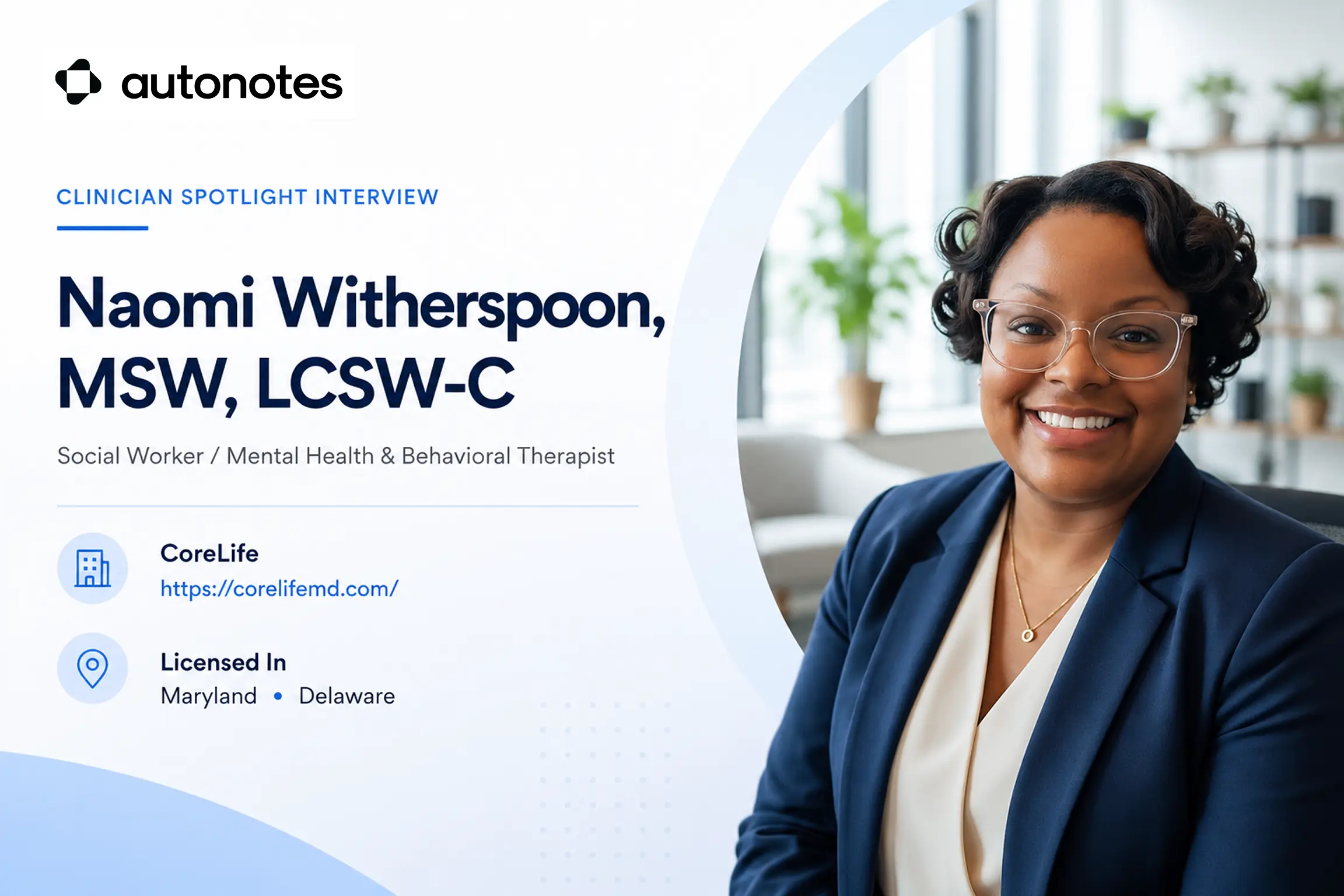
Clinician Information
Name: Naomi Witherspoon, MSW, LCSW-C
Professional Title: Social Worker / Mental Health & Behavioral Therapist
Practice: CoreLife
Website: https://corelifemd.com/
Licensed In
- Maryland
- Delaware
Populations Served
- Adults
- Teens
Specialties
- Trauma and PTSD
- Anxiety
- OCD
- Eating Disorders
- Depression
- Mood Disorders
- Stress Management
- Life Transitions and Adjustment
- Self-Esteem and Personal Growth
- Grief
- Chronic Illness and Health-Related Concerns
- Relationship and Family Stress
- Coping Skills Development
About Naomi
Tell us about your journey into behavioral health.
I became a therapist because I have always been interested in understanding people’s experiences and helping them navigate difficult times in their lives. What drew me to this work was seeing how powerful it can be when someone feels heard, understood, and supported without judgment.
I believe that everyone has strengths and resilience, even during periods when they may not feel that way themselves. Being able to walk alongside people as they work through challenges, build insight, and create meaningful change is what makes this work rewarding for me.
Tell us about your practice today.
I work with adolescents and adults facing a wide range of concerns, including anxiety, depression, trauma, ADHD, mood disorders, grief, life transitions, stress, eating disorders, and challenges related to chronic health conditions.
Drawing from 11 years of experience in medical and behavioral health settings, I understand how mental health, physical health, and everyday life stressors often intersect.
My practice is unique because I prioritize authenticity, collaboration, and individualized care. I believe therapy should feel like a partnership rather than a one-size-fits-all approach.
I strive to create a space where clients feel safe to be themselves, explore difficult experiences, and build practical skills that support long-term growth and healing. Whether someone is seeking support during a crisis or working toward personal development, I meet them where they are and tailor treatment to their unique needs and goals.
What are you most passionate about when working with clients?
I am most passionate about building genuine therapeutic relationships and helping clients discover their capacity for growth and healing. I believe meaningful change happens when people feel safe, supported, and empowered to explore their experiences without fear of judgment.
I am especially passionate about helping individuals navigate anxiety, depression, trauma, life transitions, and the challenges that arise when mental and physical health intersect. Seeing clients develop greater self-awareness, confidence, and resilience while working toward their goals is what makes this work so meaningful to me.
Before AutoNotes
What was documentation like before AutoNotes?
Documentation varied depending on session type, treatment plan updates, and complex cases. Balancing quality clinical care with administrative requirements was one of the most frustrating parts of my work.
I wanted my notes to be thorough enough to accurately reflect clients’ needs and progress while also meeting documentation and billing requirements.
At the end of the day, I would review remaining documentation, respond to client messages and care coordination needs, check my schedule for the following day, and ensure treatment plans and assessments were up to date. My goal was always to leave with as little unfinished work as possible so I could be fully present for clients the next day.
What impact did documentation have on your life outside of work?
Documentation often had a bigger impact on my personal life than I realized. The biggest impact was on my time and mental energy.
Even when I wasn’t actively writing notes, there was often a lingering sense that there was still work waiting for me. That made it more difficult to be fully present with family, enjoy personal activities, or truly disconnect and recharge.
While documentation is an important part of providing quality care and maintaining compliance, it can contribute to stress and burnout when it consistently extends beyond the workday.
Finding ways to streamline documentation and create efficient workflows became essential for maintaining a healthy work-life balance and ensuring I could bring my best self to both my clients and my personal life.
What solutions had you tried before AutoNotes?
Before AutoNotes, I tried several approaches to make documentation more manageable, including note templates, shortcuts, dictation tools, and structured workflows.
While those strategies helped somewhat, documentation remained one of the most time-consuming aspects of my practice.
Discovering AutoNotes
How did you first hear about AutoNotes?
I was introduced to AutoNotes through my current employer, CoreLife.
What initially made you skeptical about AI?
I didn’t have any skepticism about using AI. I was willing to try anything that would support me professionally.
What convinced you to try AutoNotes?
My employer offered the program to all therapists at no cost to trial, which gave me the opportunity to experience the platform firsthand.
Life With AutoNotes
How has your documentation process changed?
AutoNotes transformed my documentation workflow. What used to take hours each week now takes a fraction of the time, allowing me to stay caught up on notes and focus more on client care.
Time saved
Approximately 5 to 10 hours per week.
Most impactful features
- Typing a Summary / Dictation
- Live Session Recording
- Treatment Plans
- Client Overviews
- Clinical Recommendations
Example impact
During a complex case, AutoNotes allowed me to remain fully present with the client without worrying about documenting in real time, since the conversation was captured automatically.
Impact Beyond Documentation
Impact on work and well-being
AutoNotes improved not just efficiency, but overall quality of life. It reduced stress, improved work-life balance, and allowed for greater focus on client care.
What changed
AutoNotes has allowed me to reclaim time, reduce stress, and establish healthier boundaries between work and home.
What do you do with that time?
I now spend more time caring for clients, investing in personal growth, and enjoying life outside of work.
Privacy & Trust
Initial concerns
None.
Current perspective
Now that I understand how AutoNotes operates, I have no concerns.
Final Thoughts
Is AutoNotes worth trying?
Yes, it is definitely worth trying.
AutoNotes helps me…
AutoNotes helps me with my overall workflow and professional development.
One thing therapists should know
The biggest misconception is that AutoNotes is simply a note-writing tool. What it really provides is the freedom to be more present with clients and focus on meaningful work.